
The Smart Ring: A Tiny Gadget That Wants to Learn More About Your Body
A smart ring combines minimalist design with wearable technology: a small device that can record data about sleep, activity and some body indicators. Growing market attention in 2026 raises a real question: is a smart ring genuinely a better choice than a smartwatch, or just a new shape for the same technology?
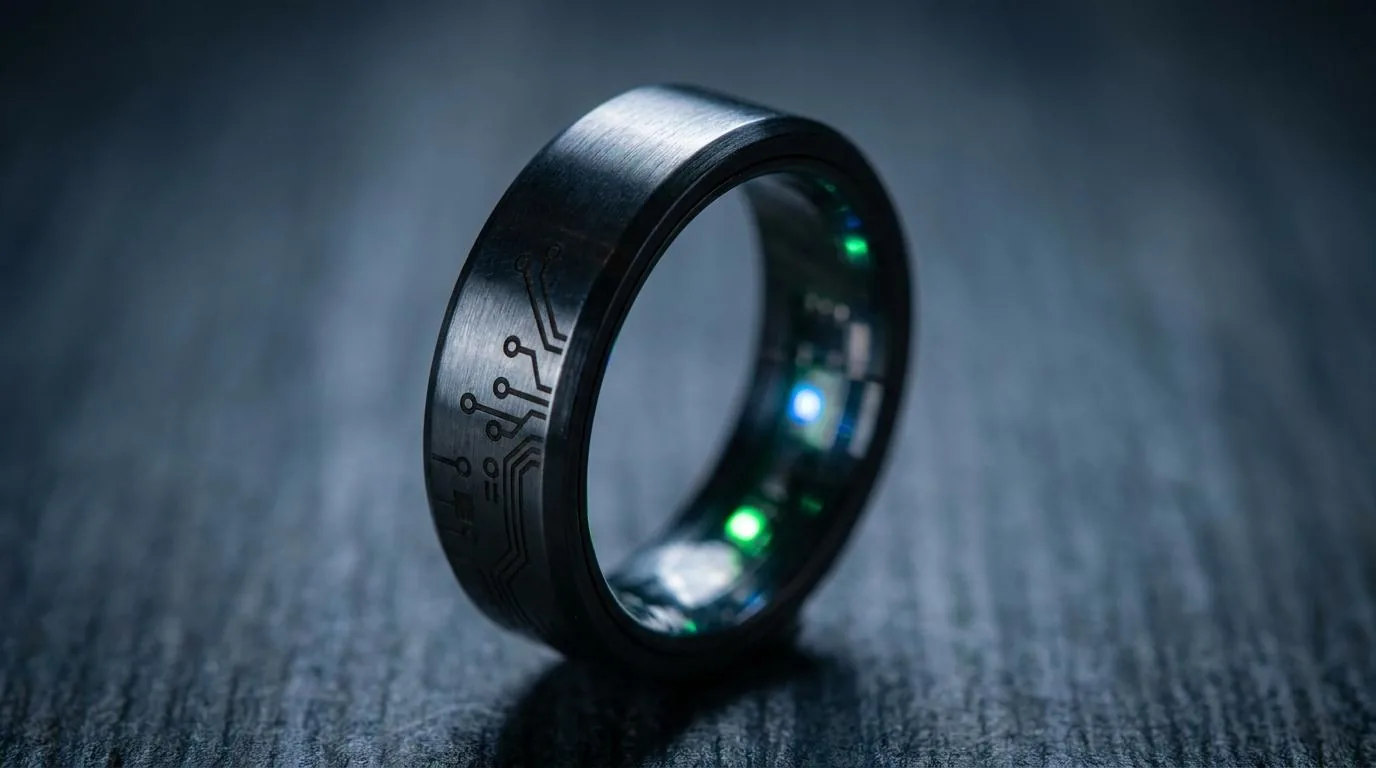
When we talk about wearables, the smartwatch is usually the first product that comes to mind. But not everyone needs a screen, constant notifications or app controls on their wrist. Some people simply want to know how their sleep is trending, how their activity changes through the day, or what the recorded data says about their daily habits.
A smart ring appeals to exactly this group. It sits on your finger, records data with built-in sensors and usually shows the result in a phone app. Many models have no display at all, which makes the experience about collecting data in the background.
A small device should not be mistaken for an unlimited one, though. A smart ring may suit sleep trends, but it is not necessarily the best tool for tracking a workout in real time. And the numbers and scores in the app are not always a direct measurement of a medical condition; some are the result of algorithmic analysis of sensor data.
How does a smart ring work?
Inside a smart ring you can find optical sensors, motion sensors, a tiny battery and wireless components. The exact mix depends on the product. The ring records data and passes it to its own app through the connection with your phone.
The companion app plays a major role in the final experience. Raw data is not very usable for most people; the software processes it and presents charts, a daily report, or indicators such as sleep quality and readiness. That is why app quality and the clarity of its explanations can matter as much as the hardware specs.
Heart rate and optical sensors
Many smart rings use optical sensors to estimate heart rate. This needs good contact between the sensor and your skin. A wrong size, a ring that rotates, hand movement and the environment can all change signal quality.
Readings taken at rest are not the same as measurements during hard exercise. If your main goal is training and moment-by-moment heart rate, check how that specific model performs in the activity you care about.
Sleep tracking
Sleep is one of the most important uses of this product category. Depending on the model, the ring can record movement, heart rate and some physiological changes during the night. The app then uses this data to estimate sleep duration, stages or recovery.
These reports are more useful for spotting patterns over several days or weeks than for judging a single night. A low score does not necessarily mean illness, and a high score does not guarantee that your sleep was ideal in every respect.
Skin temperature and daily activity
Some models also record skin temperature changes or daily movement. This data can help you see changes against a personal baseline. Still, skin temperature is not the same as core body temperature, and activity estimates depend on the device’s sensors and algorithms.
The key principle when reading the data
A smart ring is a tool for observing trends, not a substitute for a medical diagnosis. For a health concern, consumer device data should never be the only basis for a decision.
Why are smart rings getting more attention in 2026?
The wearables market is moving towards more specialised products. The smartwatch is still useful for notifications, apps and quick interaction, but a smart ring tries to record body data in the background without adding another screen.
This approach appeals to people who do not want a large watch on their wrist while they sleep, or who are tired of constant notifications. A jewellery-like look may also make it easier to wear in everyday situations; real comfort, of course, depends on the ring’s size and design.
Another factor is competition between brands. Oura, Samsung, RingConn and Ultrahuman have each entered the market with a different mix of hardware, software and services. 2026 reports point to growing interest in smart rings, but that does not mean one brand is clearly better or that the product suits everyone.
In July 2026, FDM CCS Insight forecast 53% growth in smart ring shipments for the year (to about 6 million units). That figure is a market forecast, not final sales data, and it is calculated from a small base. Its main value is showing how much the industry’s attention to this category has grown.
What information does a smart ring give you?
Features depend on the model, but in many products you will find:
- Heart rate: to follow the trend at rest and during some activities.
- Sleep: to estimate sleep duration and some of its stages.
- Daily activity: to see movement and activity levels through the day.
- Skin temperature changes: on equipped models, to follow trends against a personal baseline.
- Heart rate variability: to observe some patterns related to rest and recovery.
- Blood oxygen: only on models that offer it; its accuracy and usefulness should be checked separately.
A feature on the spec sheet does not mean the same accuracy in every condition. During intense activity, hand movement or a badly fitting ring in particular, data quality can change.
The main smart ring brands
Oura Ring
Oura is one of the best-known names in this market, and its products focus on sleep, activity and recovery trends. The software and the way personal reports are presented are a big part of the experience. Before buying, check the subscription cost, which features depend on membership, and app compatibility.
Samsung Galaxy Ring
The Galaxy Ring appeals to people who already use Samsung products and the Samsung Health app. Integration with the ecosystem can make things simpler, but you should check the official list of compatible phones and which software features are available to you.
RingConn
RingConn is an active brand in the smart ring market. When looking at its models, the stated battery life, software cost, app features, charging method and the exact generation of the device all matter. Do not assume the specs of one generation apply to every model.
Ultrahuman
Ultrahuman also focuses on sleep, activity and recovery-related trends. Compare it with rivals on a specific model and its availability; software cost, compatibility and regional support can all affect the buying decision.
None of these names alone guarantees the best choice for you. App quality, the right size, long-term cost and your daily use should be judged alongside the brand.
Smart ring or smartwatch?
| Criterion | Smart ring | Smartwatch |
|---|---|---|
| Design | Small, no display | Larger, with a display |
| Sleep tracking | A key use for many models | Available on many models |
| Notifications and apps | More limited | Usually broader |
| Workouts | Depends on model and type of training | More interactive features on many models |
| Software cost | Some models are subscription-based | Varies by brand and service |
If notifications, music control, app interaction and workout tracking matter to you, a smartwatch may be the more complete choice. If you want a small device to follow sleep and activity trends and do not need a screen, a smart ring is worth a look.
The wider picture: are rings the future of wearables?
In another article I look at the overall direction of this market, the real cost and five questions to ask before buying.
Read the article ↗Limitations to know before you buy
A wrong size can affect the data
The ring needs to be comfortable yet fit the finger properly. A loose ring may rotate and change the contact between sensor and skin; one that is too tight can be uncomfortable. Take the manufacturer’s sizing guide seriously.
Software scores do not show the whole truth
A sleep or daily readiness score is an algorithmic summary of several data points. It cannot show every factor that affects your health and performance. Look at multi-day trends and avoid firm conclusions from a single number.
Exercise and working with tools can be difficult
In workouts that involve gripping weights, bars or hard tools, the ring can be uncomfortable or exposed to pressure and scratches. Check the manufacturer’s guidance on safe use in different activities.
Do not underestimate the subscription cost
Some companies charge a subscription for part of the analysis or app features. The ring’s initial price is only part of the cost; it is worth calculating the multi-year cost of use too.
The app and regional services matter
Without suitable software, a ring can lose much of its value. Phone compatibility, app availability, account access, cloud services and repair conditions should all be checked before purchase.
Privacy of health data
Sleep, activity and heart rate data are personal information. If the app syncs this data to cloud services, you need to know what is collected, how it is stored and what options exist to delete or manage it.
Before buying, read the manufacturer’s privacy policy and keep the app’s permissions limited to what you need. If you use third-party services or AI features, find out which data is shared with them.
Smart ring buying guide
Define your main need
Sleep, daily activity or exercise; each calls for different criteria.
Choose the size carefully
If a sizing kit is available, use it.
Check phone compatibility
Software support matters more than Bluetooth alone.
Test battery life
Compare the stated figure with how you will use the ring.
Work out the subscription cost
Separate the free features from the paid ones.
Know the data limits
Consumer tracking is not a medical diagnosis.
Check after-sales service
Consider the charger, repairs and warranty.
Take privacy seriously
Read how your data is stored and deleted.
Buying and using one in Iran
In the Iranian market, beyond price you need to consider app compatibility, the ability to create an account, access to cloud services and software support. Some features may depend on the country or the account and may not be available everywhere.
If a specific feature such as menstrual cycle analysis, blood oxygen monitoring or a particular advanced report matters to you, check before buying that it is actually enabled for your model and region. Also clarify the warranty, repair options and charger availability with the seller.
Conclusion: is a smart ring worth buying?
A smart ring is an appealing wearable for people who want to follow their daily data without a large display. The focus on sleep and activity, the small design and reporting in a phone app are what set this category apart from the smartwatch.
Even so, the choice should follow your real needs. If you need a display, notifications and interactive features, a smartwatch may offer more value. If trend tracking and a low-profile design matter more, a ring can be a good choice, provided you have checked the size, app, subscription and service terms.
The most important point is not to confuse a gadget’s data with a medical diagnosis. A smart ring can help you understand your habits, but its numbers and scores show only part of the picture.
What does a smart ring track?
Depending on the model, it may record heart rate, sleep, activity, skin temperature changes and some other indicators.
Is a smart ring better than a watch?
No, there is no absolute winner. A ring is smaller and less distracting, but a watch usually has a display and more interactive features.
Is smart ring data reliable?
Accuracy depends on the model, size, type of activity and conditions of use. Medical decisions should not rest on ring data alone.
Do I need a subscription for a smart ring?
It depends on the brand and model. Before buying, find out which features are free and which need a subscription.
Can a smart ring be used in Iran?
You need to check app, phone, account and software service compatibility for the specific model.
To work with me on projects like these, click this button.
My services & collaboration